Integration of third-party providers in MACH architectures


A MACH architecture (Microservices, API-first, Cloud-native, Headless) offers companies maximum flexibility and future-proofing. However, the true added value only emerges when external services, partner APIs, and third-party systems are seamlessly integrated. Whether it's payment, CRM, PIM, or search solutions – the smooth interconnection determines efficiency, scalability, and customer experience. Affenfels supports you in strategically planning these complex integration scenarios, technically implementing them cleanly, and operating them stably in the long term.
What to consider when connecting third-party systems
Variety of different standards
Each provider brings its own authentication procedures, API standards, and release cycles. Without clear governance, incompatibilities and disruptions in operations are at risk.
Security and compliance requirements
From identity management to secrets handling to GDPR-compliant data processing, integrations must meet high security and data protection standards.
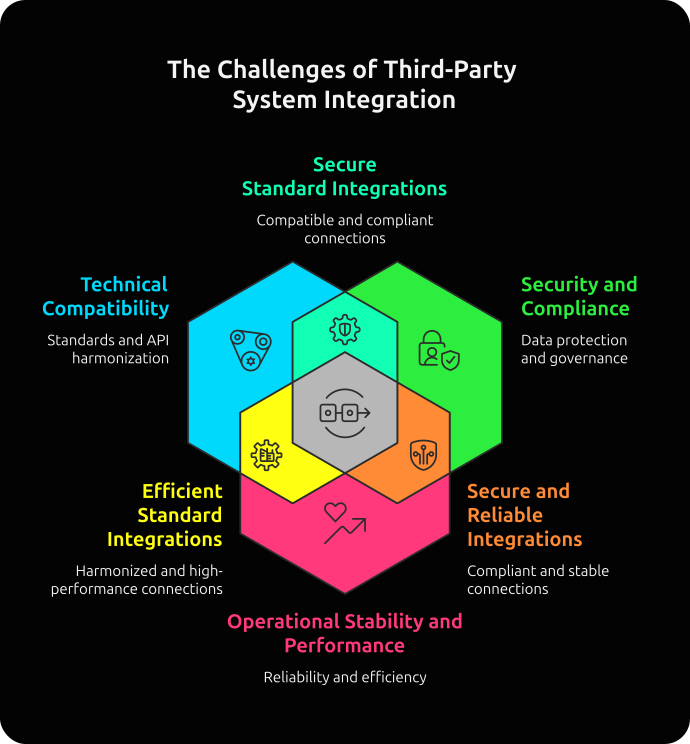
Operational Stability & Performance
Unreliable webhooks, rate limits, or high latencies of external systems can jeopardize overall performance. Resilience mechanisms and clean monitoring are therefore indispensable.
Cost and vendor lock-in risks
Strong dependencies on proprietary APIs or pricing models increase long-term operating costs. Exit strategies and anti-corruption layers are essential for a sustainable architecture.
Together, we develop integrations that not only work seamlessly today but also withstand future requirements.

Philipp Kindermann
Team Lead
von Affenfels
Why API-First?
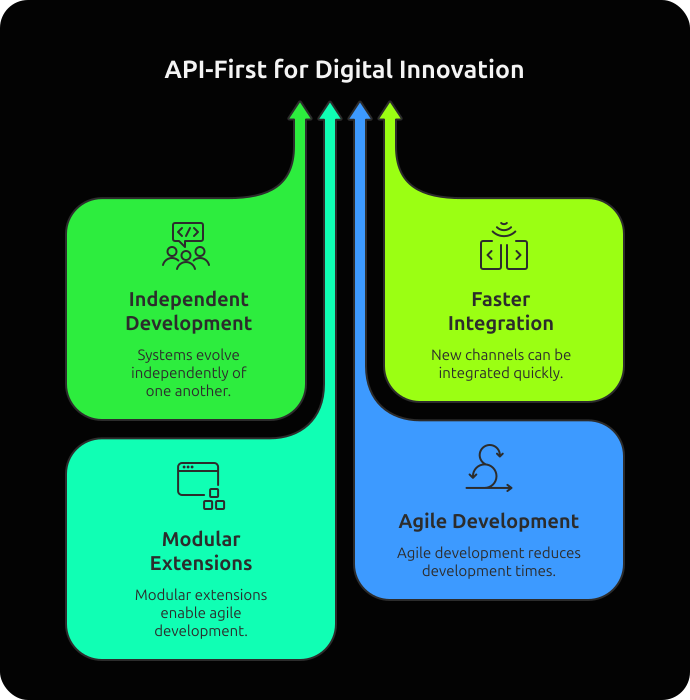
API-First makes your company more technologically independent, agile, and competitive.
Future security & flexibility
An API-first design ensures that systems and services can be developed independently of one another. New channels (apps, voice, IoT, partner portals) can be integrated more quickly without the need to rebuild the entire platform.
Faster innovation & time-to-market
APIs create the foundation for modular extensions. New features or integrations can be developed and tested agilely, without monolithic dependencies. This reduces development times and accelerates the market launch of new digital services.
Scalability & Performance
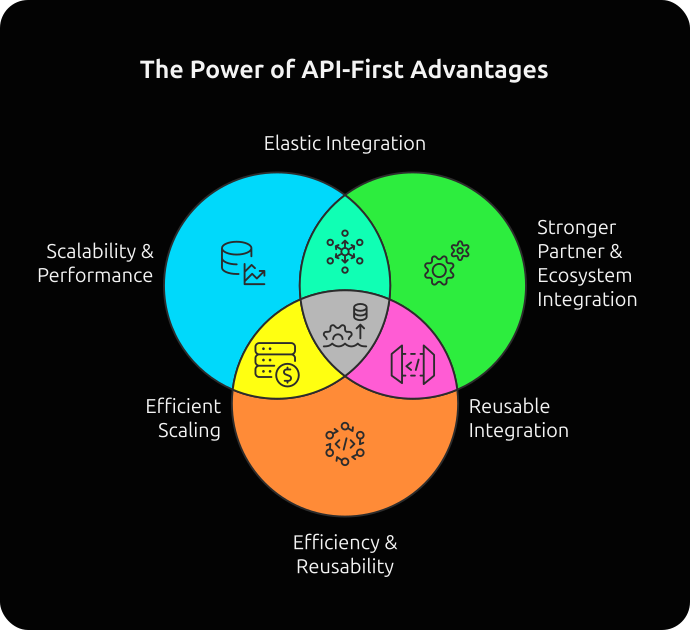
With clearly defined interfaces, systems can be targeted for scaling. Peak loads (e.g., in e-commerce or publishing) can thus be efficiently cushioned – performance and availability remain secured even with growth.
Stronger partner & ecosystem integration
API-First allows for the seamless integration of external services such as Payment, Analytics, PIM, CRM, or Marketing Automation. Companies can more easily benefit from innovations in the market without getting caught up in proprietary systems.
Efficiency & Reusability
A consistent API design reduces redundancies, facilitates the reuse of services, and lowers operational and development costs in the long term. Teams can deliver faster as they can rely on clearly documented interfaces.
Edited with AI


What we offer you
- Strategic Consulting & Architectural PlanningAnalysis of dependencies, risks, and integration scenarios
Development of an API and eventing strategy with clear governance rules - Technical Integration & ImplementationBuilding API gateways, BFFs (Backend for Frontend), and anti-corruption layers
Connecting external systems (e.g., Payment, CRM, PIM, Analytics) including authentication, security, and caching - Security & ComplianceIntroduction of Identity & Access Management, Secrets Handling, and Zero Trust principles
Data protection-compliant integration with AV contracts, encryption, and data residency concepts - Operations & Quality AssuranceObservability with Logging, Tracing, Metrics, and Correlation IDs
Resilience patterns (Retries, Circuit Breaker, Bulkheads) and automated test scenarios for APIs and integrations
Frequently Asked Questions
What is particularly important when integrating third-party providers into MACH architectures?
Clear governance rules are important, as third-party providers often bring different authentication procedures, API standards, and release cycles. Additionally, security, compliance, monitoring, and resilience must be considered from the outset to avoid operational disruptions.
What risks arise from connecting external systems?
The biggest risks include incompatibilities, unreliable webhooks, rate limits, high latencies, as well as security and privacy issues. Vendor lock-in due to proprietary APIs or pricing models can also increase costs and dependencies in the long term.
Why is API-First sensible for MACH architectures?
API-First creates clearly defined interfaces through which systems can be developed independently of one another. This makes companies more flexible, allows them to connect new channels and partners more quickly, and brings digital services to market faster.
How can security and compliance be ensured in third-party integrations?
Through identity and access management, secure secrets handling, zero-trust principles, and GDPR-compliant data processing. Additionally, encryption, AV contracts, and data residency concepts help reliably meet regulatory requirements.
How does the performance remain stable with external integrations?
For stable integrations, resilience mechanisms such as retries, circuit breakers, and bulkheads are important. Additionally, logging, tracing, metrics, and correlation IDs ensure clean monitoring, allowing problems to be detected and resolved early.
Contact person

Philipp Kindermann
Team Lead