Customer Data Management
Only collect – or also use?


Many companies tend to collect as much data as possible. However, it is only when this data is meaningfully integrated and utilized that its true value unfolds: it forms the basis for individual customer experiences, strengthens the customer experience, and sustainably improves customer loyalty.
The challenge: data diversity instead of data depth
Your customers interact through numerous channels – website, social media, email, point of sale, apps. This generates data that is isolated and not very meaningful, but aggregated, it becomes a valuable treasure trove of data. To unlock this treasure, structure, strategy, and technology are needed.
Transforming data into insights – and from insights into sustainable customer experiences.

Philipp Kindermann
Team Lead
von Affenfels
Success factors for intelligent data management
Strategically collect – do not hoard
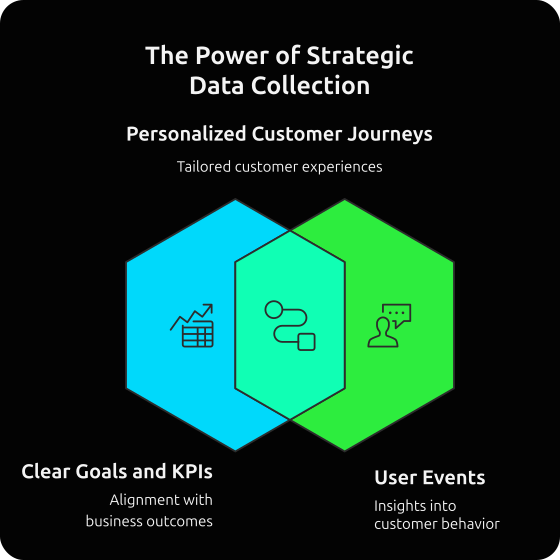
Define clear goals and KPIs:
- Which data provides real added value?
- Which user events are crucial for loyalty and conversion?
- How can a personalized Customer Journey be derived from this?
Dismantling data silos
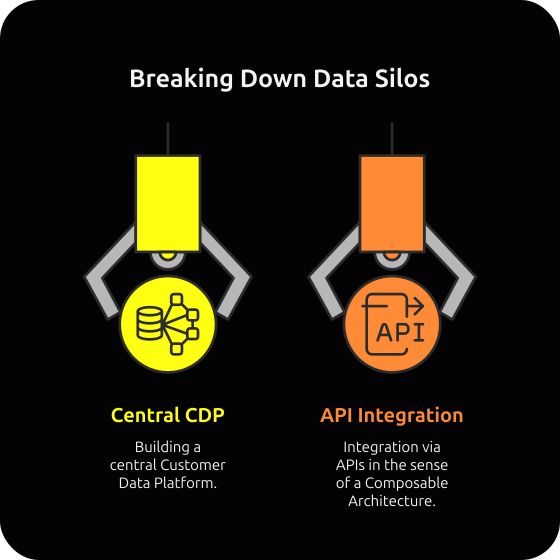
Data is often scattered across CMS, CRM, ERP, or shop systems.
The solution:
- Building a central Customer Data Platform (CDP) or
- Integration via APIs in the sense of a Composable Architecture.
This creates a unified, cross-channel customer profile.
Ensure data quality – separate the wheat from the chaff
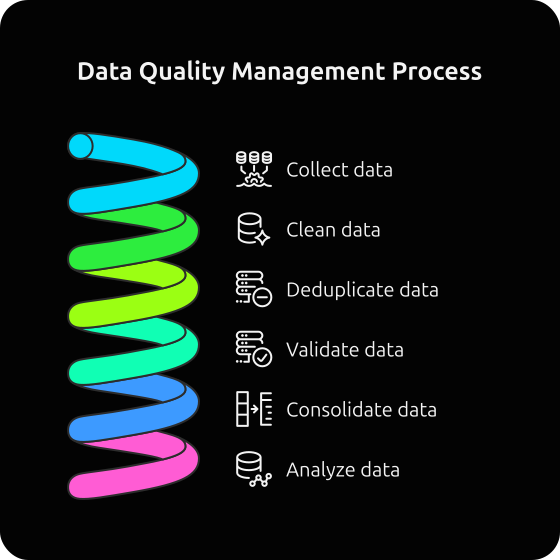
- Before data can create value, it must be cleaned, deduplicated, and validated.
- Automated data cleansing and uniform identifiers ensure consistent datasets and better decision-making foundations.
Data Protection & Compliance
A clear consent strategy and data protection policies (GDPR-compliant) are essential to avoid warnings and to strengthen the trust of your customers.
Bringing technology and organization together
- Missing API interfaces often complicate integration into existing system landscapes.
- Different departments work with their own tools and goals – this complicates data sovereignty.
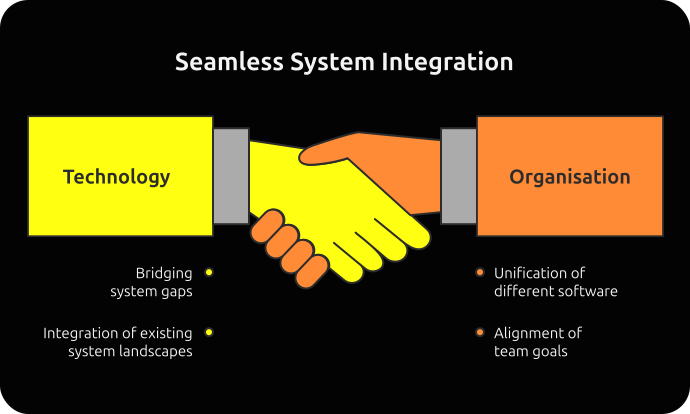
Here, a MACH architecture (Microservices, API-first, Cloud-native, Headless) helps to connect systems flexibly and break down organizational boundaries.
Edited with AI


What we offer you
We accompany you on the path to a future-proof Customer Data Management:
- Construction or integration of a Customer Data Platform (CDP)
- API integration in the sense of a composable architecture
- Automated Data Cleansing & Identity Management
- Integration of Consent Management Platforms (CMPs)
- Use of AI-based tools for orchestration, predictive analytics & marketing automation
Frequently Asked Questions
Why is it not enough to just collect customer data?
Individual data points from websites, social media, email, apps, or point of sale are often only limited in their significance. Only through structuring, linking, and evaluating do they yield reliable insights for better decisions and personalized customer experiences.
How can data silos in companies be dissolved?
Data silos can be resolved through a central Customer Data Platform (CDP) or via API integrations in a Composable Architecture. This creates a unified, cross-channel customer view across systems such as CMS, CRM, ERP, and Shop.
What role does data quality play in Customer Data Management?
High data quality is the foundation for reliable analyses and effective measures. Data should be cleaned, deduplicated, and validated to create consistent datasets and better decision-making bases.
Why are data protection and consent management so important?
Data protection and a clear consent strategy are necessary to operate in compliance with the GDPR, avoid legal risks, and strengthen customer trust. Only with transparent policies can data management be implemented sustainably and securely.
What technologies support modern data management?
Important components include Customer Data Platforms, API-based integrations, automated data cleansing, identity management, consent management platforms, as well as AI-supported tools for orchestration, predictive analytics, and marketing automation. A MACH architecture can help connect systems flexibly.
Contact person

Philipp Kindermann
Team Lead