Applied AI solutions
We can’t just spell AI


Artificial intelligence is a central driver of digital transformation. With modern AI technologies, we create new opportunities for data organization, intelligent use and searchability of information from various sources, as well as for the automation of complex processes. Von Affenfels supports you comprehensively – in the conception, implementation, further development, and operation of AI-supported systems.
What matters in the use of AI
Data Organization & Data Lake Architecture
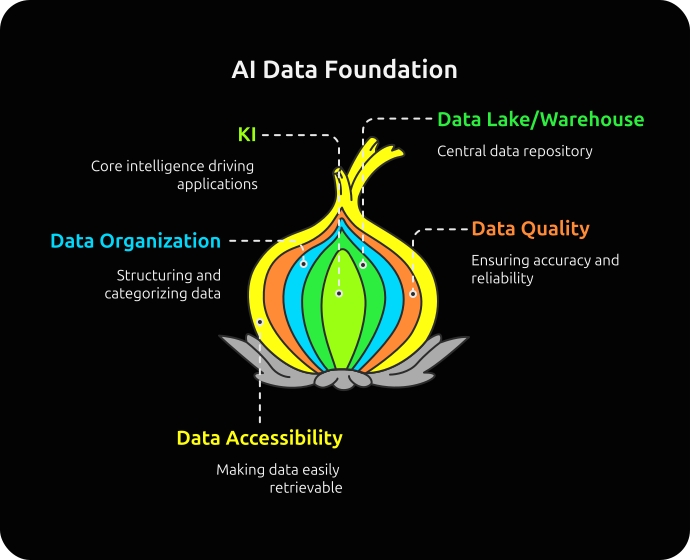
The value of AI crucially depends on the quality and accessibility of the data. A central data platform (e.g., Data Lake or Data Warehouse) consolidates structured and unstructured information and makes it scalable for a wide range of tasks – from analysis to searchability to machine learning. This way, content remains quickly findable across all sources, consistent, and usable for different application areas.
Searchability & Analysis
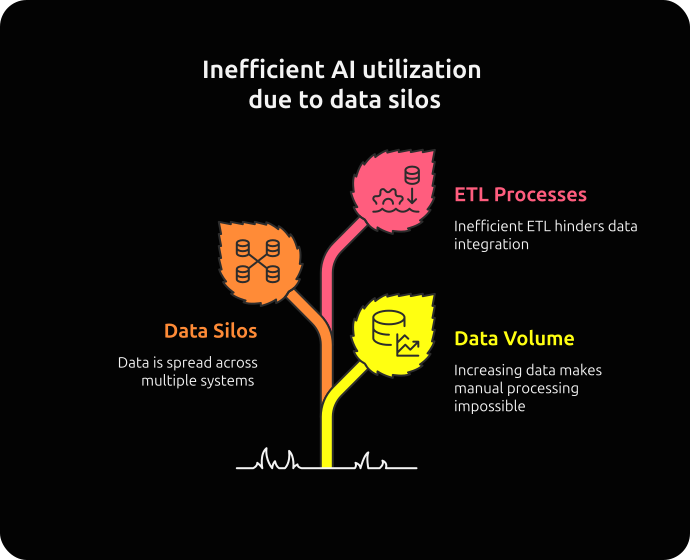
The amount of data from customer interactions, content, shop events, log data, and internal documents is steadily increasing. In order for this information from various systems to be reliably utilized, we centralize it (e.g., in the Data Lake) and integrate it through streamlined ETL processes. The data is prepared for later AI use cases and can subsequently be processed, for example, by chatbots using Retrieval Augmented Generation (RAG) workflows, by AI models, or by agents.
Agents & Workflows
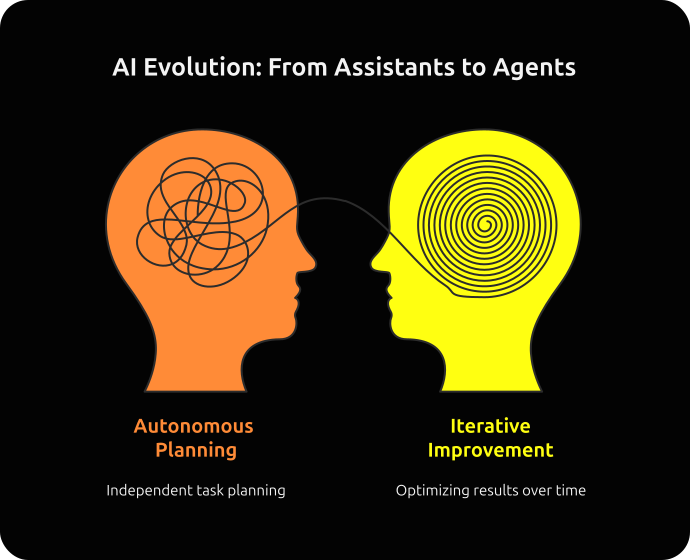
The next step in the AI evolution is the further development of assistants into autonomous agents. While assistants primarily act in a supportive role, agents take on complete task packages: they plan independently, execute, and iteratively improve results. This allows processes to be more automated and continuously optimized. Typical areas of application include, for example, content creation and optimization, monitoring & analysis of market and customer behavior, research & reporting.
Usability & Acceptance
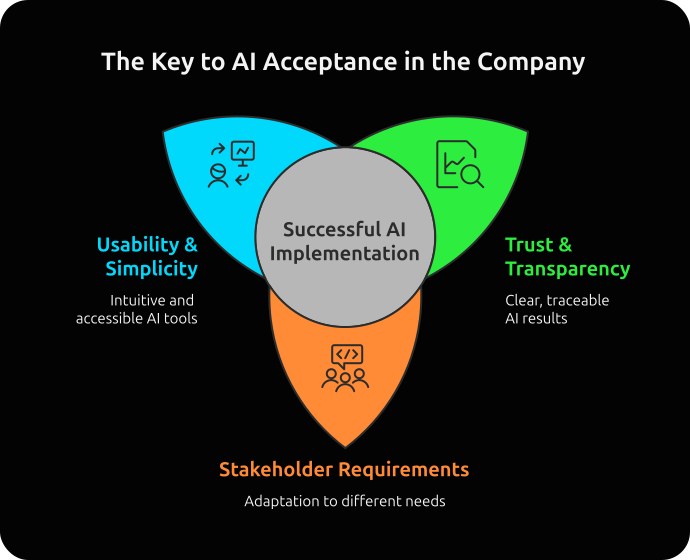
AI only realizes its full value through widespread use in the company. Different stakeholder requirements must be taken into account while ensuring that the operation remains simple, understandable, and trustworthy. Transparency, traceability of results, clean data organization, as well as central ownership and access rules are crucial success factors. Additionally, change management and training support a sustainable implementation and acceptance among all parties involved.
Technology stack
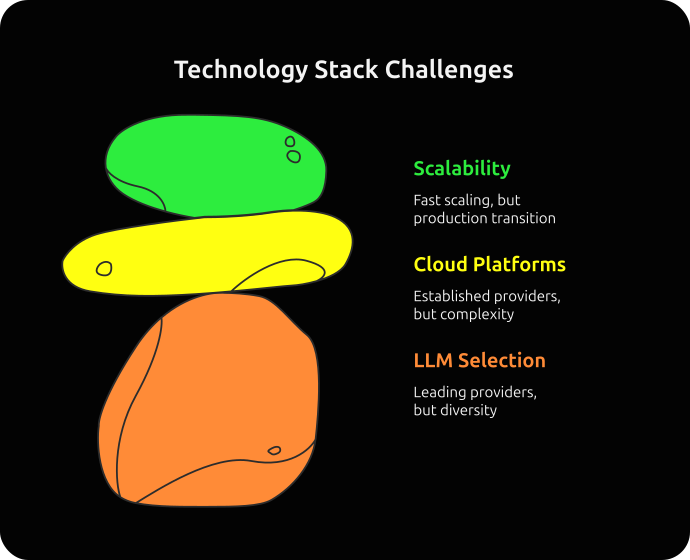
Our technology stack is deliberately modular: For the implementation of chatbots and the orchestration of complex workflows, we rely on Lang-Chain, Lang-Graph, Lang-Smith, and MastraAI, among others. When selecting the appropriate LLMs, we work with leading LLM providers such as OpenAI, Anthropic, and Google. We prefer to realize applications with Next.js and the Vercel AI SDK; for operation, we use established cloud platforms such as AWS, Microsoft Azure, Google Cloud Platform (GCP), and Vercel. This combination ensures rapid prototypes that can be quickly scaled and transitioned into production after the MVP phase.
Technical support for implementation and operation
Modern AI systems can significantly simplify, accelerate, and improve complex and costly processes. In this regard, we offer in-depth technical support:
- Construction & operation of data lakes – central data platforms for the consistent, scalable use of structured and unstructured information.
- Integration of analog sources into digital content ecosystems – e.g. transferring documents, PDFs, or scans into structured data systems.
- Implementation of chatbots and chat assistants using Retrieval Augmented Generation (RAG) for efficient AI-supported research and content generation through the connection of data sources and language models (LLMs).
- AI-supported research in internal & external data pools – efficient finding, analyzing, and linking of information.
- Use of agents for content creation and content optimization – e.g. for search engines (SEO) or (GEO) the optimization of content for AI responses such as Google AI Overviews or ChatGPT, to automatically generate, enhance, and purposefully publish content.
- Data analysis & AI-supported evaluation – structured preparation of large data volumes to generate actionable insights for editorial, marketing, and strategy.
Edited with AI


What we offer you
- Strategy & Planning:
Strategy consulting & goal definition in the AI context (overarching - guidelines, vision, and roadmap); AI use case; consulting & requirements analysis; AI readiness analysis; architecture & data; selection and consulting on architecture and technology stack; data migration, preparation, and organization. - Development & Integration:
Development & Integration of AI-supported services; UX/UI design for AI-supported applications; Quality & Security; Performance optimization for AI systems; Security checks & audits - Projects & Operations:
Project management & agile implementation; operation & support of infrastructures
Frequently Asked Questions
Why is a central data platform important for the successful use of AI?
Because AI only works reliably when data is high-quality, consistent, and quickly accessible. A central platform like a Data Lake or Data Warehouse consolidates structured and unstructured information and makes it scalable for analysis, search, and machine learning.
What role do searchability and RAG workflows play in AI applications?
They help to make large amounts of data from various sources usable in a targeted way. Through central data storage and ETL processes, information can be prepared for AI use cases and then processed by chatbots with Retrieval Augmented Generation, AI models, or agents.
What distinguishes AI agents from traditional assistants?
Classic assistants support individual steps, while AI agents can independently plan, execute, and iteratively improve entire task packages. This allows for greater automation of processes, such as in content creation, analysis, research, or reporting.
What prerequisites promote the acceptance of AI in the company?
Decisive are simple operation, transparent results, traceable processes, and clear access rules. Additionally, clean data organization, defined responsibilities, change management, and training support the sustainable implementation of AI.
What technical services are offered in the implementation of AI projects?
This includes the establishment and operation of data lakes, the integration of analog sources into digital systems, the development of chatbots with RAG, AI-supported research, the use of agents for content optimization, as well as data analysis and technical support for operation, security, and scaling.
Contact person

Stefan Hartmann
AI Consultant & Developer